You step outside one morning in April and notice something strange — brown, black, or yellow spots scattered across your tree’s leaves. Maybe some leaves are curling. Maybe a few have already fallen.
It’s a common concern for Houston homeowners this time of year.
The good news? Not every spotted leaf means your tree is dying.
The bad news? In Houston’s warm, humid spring climate, leaf spots are often early signs of spring diseases that can weaken trees if ignored.
In this guide, we’ll break down what causes leaf spots, the most common spring diseases in Houston, what’s cosmetic versus serious, and when it’s time to call a professional.
Why Spring Diseases Are Common in Houston
Houston’s spring weather creates the perfect environment for fungal growth.
Here’s why:
- Warm temperatures arrive early
- Humidity levels increase quickly
- Frequent spring rainfall keeps leaves wet
- Dense landscaping limits air circulation
- Trees stressed by winter cold snaps or drought are more vulnerable
Most spring diseases are fungal in nature. Fungi thrive in moisture, especially when leaves stay damp for long periods. When spores land on wet foliage, infection can begin within hours.
Trees that are already stressed — from soil compaction, root damage, or improper pruning — are more likely to develop visible symptoms.
The Most Common Spring Diseases That Cause Leaf Spots
Several diseases commonly affect Houston trees each spring. Here are the ones we see most often.
Anthracnose
Anthracnose is one of the most common spring diseases in Houston landscapes.
Symptoms:
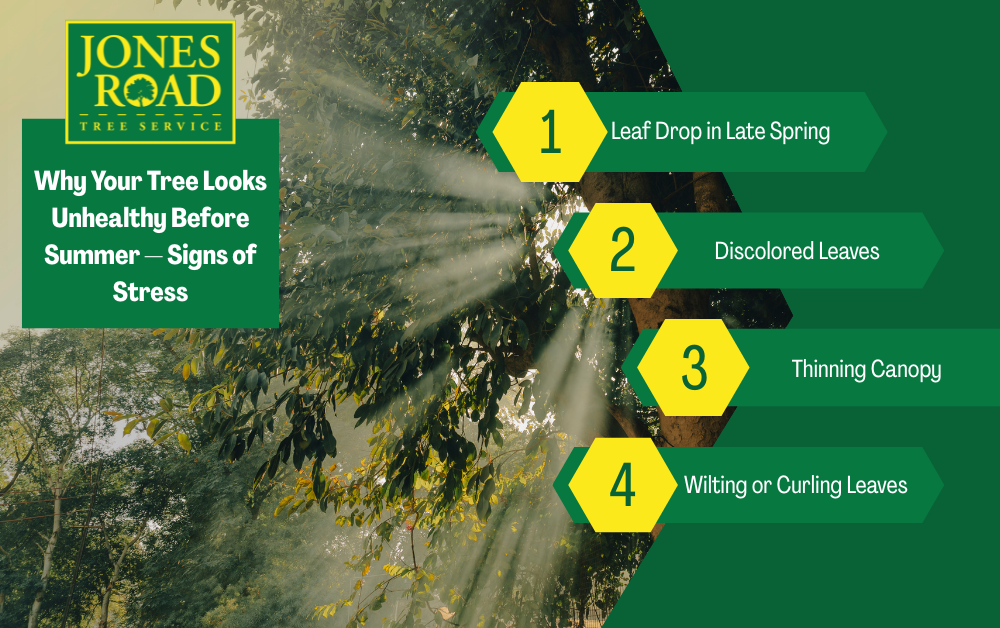
- Irregular brown or black blotches on leaves
- Leaf curling or distortion
- Premature leaf drop
- Small dead patches along leaf veins
It frequently affects:
- Live oaks
- Red oaks
- Sycamores
- Maples
In most cases, anthracnose is not fatal. However, repeated yearly infections can stress trees and weaken overall canopy density.
Powdery Mildew
Powdery mildew is easy to identify.
Symptoms:
- White or gray powder-like coating on leaves
- Distorted or curled new growth
- Stunted leaf development
This fungus thrives in humid spring weather, even when rainfall is light. While often cosmetic, severe infections can limit photosynthesis and reduce overall tree vigor.
Leaf Spot Fungi
Many fungal species cause circular leaf spots.
Symptoms:
- Brown, black, or yellow-ringed circular spots
- Spots that enlarge and merge
- Leaves turning yellow and dropping early
In mild cases, leaf spot diseases are mostly aesthetic. But if spotting is widespread and accompanied by heavy leaf drop, it can signal a more serious issue.
Oak Wilt (A Serious Concern in Texas)
Oak wilt is one of the most dangerous tree diseases in Texas.
Symptoms:
- Browning that begins at leaf edges and moves inward
- Veins remain green while outer tissue dies
- Rapid leaf drop
- Entire branches dying back
Oak wilt spreads quickly and can be fatal. If you suspect oak wilt, immediate professional evaluation is critical.
Unlike minor spring diseases, oak wilt requires aggressive treatment and sometimes tree removal to prevent spread.
Are Leaf Spots Dangerous or Just Cosmetic?
Not all spring diseases pose the same level of threat.
Here’s how to think about it:
Likely Cosmetic:
- Small, isolated spots
- Minor leaf distortion
- No canopy thinning
- Tree otherwise healthy
Potentially Serious:
- Rapid spread across the canopy
- Early, heavy leaf drop
- Branch dieback
- Multiple seasons of infection
- Symptoms appearing on high-value trees
Repeated fungal infections weaken a tree over time. Even if the first year is minor, ongoing stress reduces resilience against storms, pests, and drought.
In Houston’s long growing season, weakened trees are more vulnerable to secondary problems.
What You Should (and Shouldn’t) Do
If you notice spotting, your response matters.
What You Can Do
- Rake and dispose of infected fallen leaves
- Improve air circulation with proper pruning
- Water deeply but avoid overhead watering
- Monitor the tree weekly for progression
- Keep mulch 2–4 inches deep and away from the trunk
These steps reduce fungal spread and improve overall tree health.
What NOT to Do
- Do not over-fertilize — excess nitrogen can worsen fungal growth
- Do not aggressively prune without proper knowledge
- Do not ignore spreading symptoms
- Do not attempt to self-diagnose serious diseases like oak wilt
Improper treatment can sometimes cause more harm than the disease itself.
When to Call a Professional Tree Company
Call a professional if you notice:
- Spots spreading rapidly across multiple branches
- Significant canopy thinning
- Browning that progresses quickly
- Signs of oak wilt
- Multiple trees showing similar symptoms
- Large trees near structures or high-traffic areas
A certified arborist can determine whether the issue is minor fungal stress or a serious systemic disease.
Early intervention often prevents larger, more expensive problems later in the season.
Preventing Spring Diseases in the Future
Prevention starts long before symptoms appear.
Here’s how Houston homeowners can reduce the risk of spring diseases:
Dormant Season Pruning
Proper winter pruning improves airflow and light penetration, reducing fungal conditions.
Improve Soil and Root Health
Healthy roots support stronger immune response. Address soil compaction and drainage issues.
Proper Watering Practices
Deep, infrequent watering is better than shallow, frequent watering.
Early Spring Inspections
Annual inspections allow professionals to catch stress factors before disease takes hold.
Monitor High-Risk Species
Live oaks, red oaks, sycamores, and other broadleaf trees are particularly vulnerable in Houston’s climate.
Healthy trees are far less susceptible to spring diseases than stressed trees.
Early Action Protects Your Trees
Leaf spots are common during Houston’s humid spring season, but they should never be ignored. Some spring diseases are minor and cosmetic. Others can signal deeper problems that threaten long-term tree health.
The key is early detection.
By monitoring symptoms, improving airflow and soil conditions, and calling a professional when needed, you can protect your trees before minor spotting becomes major decline.
If you’re noticing spots, discoloration, or unusual leaf drop this spring, don’t wait.
Schedule a professional tree health inspection with Jones Road Tree Service. Our team can identify the cause, recommend treatment if necessary, and help keep your Houston landscape healthy through the growing season.