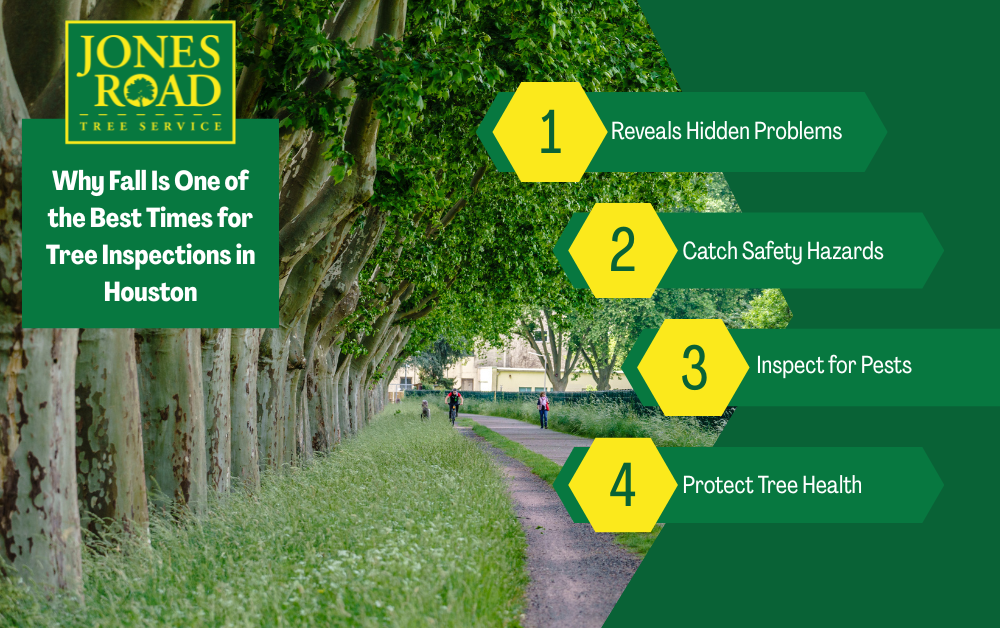
After months of Houston heat, humidity, heavy rain, and summer storms, fall is one of the most important times of year to check on the health of your trees.
Even if your trees still look green from a distance, hidden problems may already be developing. Summer stress, insect activity, disease, and storm damage often become more noticeable in early fall—making this one of the best times for professional tree inspections.
A fall inspection helps identify issues before they become serious safety hazards or expensive removals later in the year.
In this guide, we’ll explain why fall inspections matter in Houston, what arborists look for, and how early detection can protect both your trees and your property.
Why Fall Is an Important Season for Tree Health in Houston
Houston trees go through a lot during the summer.
By fall, many trees are recovering from:
- Extreme heat
- Drought stress
- Hurricane season weather
- Heavy rainfall
- Insect pressure
- Rapid summer growth
Sometimes stress symptoms don’t fully appear until temperatures begin cooling down. A tree that looked fine in July may suddenly show thinning, dead branches, or discoloration in September and October.
Fall also gives arborists a better opportunity to evaluate the tree’s structure and overall condition before winter and spring growth cycles begin again.
What a Professional Tree Inspection Looks For
A professional tree inspection involves much more than simply looking at leaves.
Arborists evaluate the tree’s overall health, structure, root system, and risk factors to identify issues early.
Dead or Weak Branches
One of the most common problems discovered during fall tree inspections is dead or weakened limbs.
Houston storms and summer heat can damage branches without homeowners realizing it right away.
Arborists look for:
- Hanging branches
- Brittle wood
- Cracks or splits
- Weak branch attachments
- Limbs over homes, driveways, or walkways
Removing hazardous limbs before winter storms arrive can reduce the risk of property damage and emergency tree work later.
Signs of Disease
Fall is also a good time to identify fungal issues and other diseases that developed during Houston’s humid spring and summer months.
Warning signs may include:
- Premature leaf drop
- Spots or discoloration on leaves
- Fungal growth near the trunk
- Dead sections in the canopy
- Cracked or damaged bark
Some diseases are mostly cosmetic, while others can threaten the long-term health of the tree.
👉 If you’ve noticed leaf spotting or unusual discoloration earlier in the year, read our blog:
What’s Causing Spots on Your Trees? Common Spring Diseases
Insect Damage
Many tree pests remain active well into fall in Houston.
During a tree inspection, arborists check for signs of:
- Bark beetles
- Borers
- Aphids
- Scale insects
- Mites
Symptoms often include:
- Small holes in bark
- Sawdust around the base
- Sticky residue on leaves
- Thinning canopy
- Dying branches
Insect damage can spread quickly if left untreated.
👉 Learn more in our blog:
Common Tree Insects in Houston (And How to Spot Damage Early)
Root and Soil Problems
Healthy roots are the foundation of a healthy tree.
Unfortunately, many root problems stay hidden underground until visible decline begins above ground.
Tree inspections often reveal:
- Soil compaction
- Poor drainage
- Root stress from drought
- Construction-related root damage
- Signs of root decay
Houston’s clay-heavy soil can make these issues even worse by limiting oxygen and water movement beneath the surface.
Why Fall Inspections Help Prevent Storm Damage
Even though summer may be ending, hurricane season isn’t over yet.
Weak trees and damaged limbs become major risks during high winds and heavy rain. A professional inspection can identify structural problems before they lead to failures.
This is especially important for:
- Large mature trees
- Trees near homes or driveways
- Trees with heavy canopies
- Trees that already showed stress during summer
Preventative pruning and corrective care during fall can significantly reduce the chance of storm-related damage later in the season.
Common Signs Your Tree May Need an Inspection
Not every tree problem is obvious. Here are some common warning signs homeowners should watch for in fall:
- Dead or hanging branches
- Sudden leaf drop
- Thinning canopy
- Leaning or shifting trees
- Mushrooms near the base
- Cracks in the trunk
- Bark peeling away
- Yellowing or discolored leaves
- Excessive insect activity
If you notice any of these symptoms, it’s a good idea to schedule a professional evaluation before conditions worsen.
The Benefits of Catching Problems Early
One of the biggest advantages of fall tree inspections is catching small issues before they become major problems.
Early detection can:
- Prevent costly emergency removals
- Reduce storm damage risks
- Extend the life of mature trees
- Improve long-term tree health
- Identify disease or pest issues early
- Protect nearby structures and landscaping
Many tree problems become much more expensive once severe decline or structural failure occurs.
Proactive care is almost always easier—and more affordable—than reactive emergency work.
What Homeowners Should Avoid
When homeowners notice signs of decline, it’s common to want to “fix” the problem immediately. Unfortunately, some DIY approaches can make things worse.
Avoid:
- Ignoring warning signs
- Over-pruning stressed trees
- Applying excessive fertilizer
- Climbing large trees yourself
- Waiting until storm damage occurs
Large trees should always be inspected by trained professionals with the proper equipment and experience.
When to Schedule a Tree Inspection in Houston
Fall is one of the best times to schedule a tree inspection if:
- Your trees showed stress during summer
- A recent storm passed through your area
- You notice dead branches or thinning
- You’re planning pruning work
- Your trees haven’t been evaluated in several years
Early fall inspections give homeowners time to address issues before winter weather and next year’s growing season begin.
Fall Is the Perfect Time to Check on Your Trees
Fall gives Houston homeowners a valuable opportunity to evaluate tree health after a long, stressful summer.
From storm damage and insect activity to disease and root stress, many issues become easier to spot this time of year. A professional tree inspection helps catch problems early, reduce safety risks, and keep your trees healthier long term.
The earlier problems are identified, the more options you typically have to protect the tree.
If your trees showed signs of stress this summer—or you simply want peace of mind before storm season ends—schedule a professional tree inspection with Jones Road Tree Service.
Our team can identify hidden issues, recommend the right care, and help protect your Houston property before small problems become major hazards.