Summer in Houston can be brutal on trees. Between extreme heat, long dry stretches, high humidity, and unpredictable rainfall, trees often struggle to stay healthy through July and August.
When homeowners notice leaves browning or canopies thinning, the first instinct is usually simple: water more.
But here’s the problem. Improper watering can stress trees just as much as drought conditions. In fact, some of the most common summer tree problems in Houston come from watering mistakes rather than a lack of water itself.
Understanding how to water correctly can make a major difference in your tree’s health, especially during Houston’s hottest months.
Why Proper Tree Watering Matters in Houston Summers
Trees work harder during the summer than many homeowners realize.
As temperatures climb, trees lose moisture rapidly through their leaves. At the same time, Houston’s clay-heavy soil can make watering difficult because water may either run off the surface or stay trapped too long around the roots.
This combination creates stress quickly.
When trees do not receive the right amount of water at the right depth, they begin showing signs of decline such as:
- Leaf scorch
- Premature leaf drop
- Thinning canopy
- Wilting foliage
- Slowed growth
If your trees already appear stressed, check out this related article:
https://jonesroadtreeservice.com/why-your-tree-looks-unhealthy-before-summer-signs-of-stress/
Proper watering supports root health, improves drought resistance, and helps trees better handle Houston’s long summers.
Mistake #1: Watering Too Frequently
One of the biggest mistakes homeowners make is watering too often.
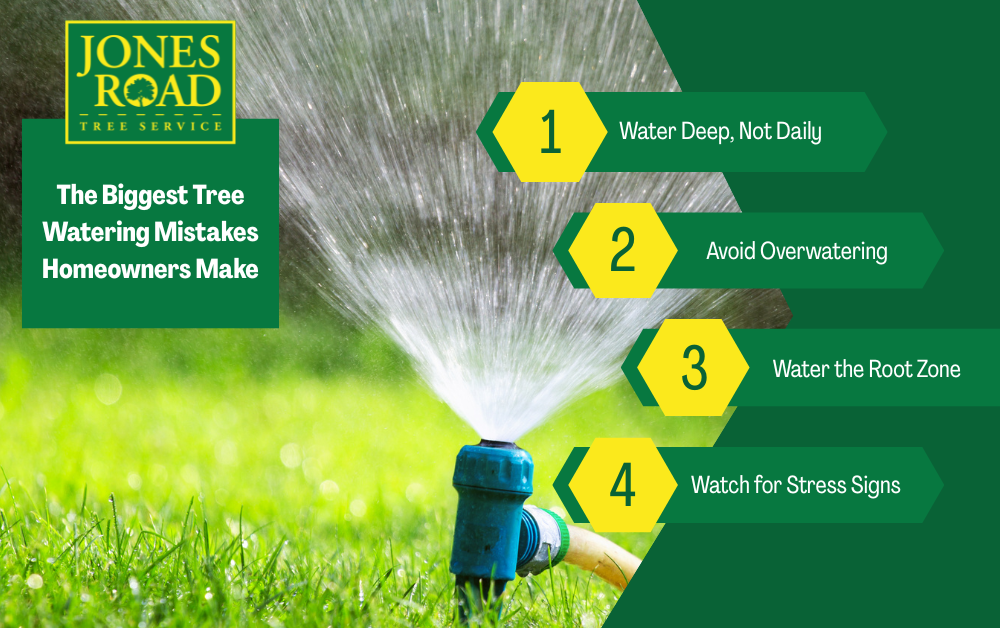
Frequent shallow watering trains roots to stay near the soil surface, where temperatures are hottest and moisture evaporates quickly.
This creates weaker root systems and reduces drought tolerance.
Why This Is a Problem
Trees with shallow roots:
- Dry out faster
- Become more heat-sensitive
- Struggle during drought conditions
- Develop weaker overall structure
Better Approach
Instead of watering lightly every day:
- Water deeply and slowly
- Allow the soil to partially dry between waterings
- Encourage roots to grow deeper underground
Deep roots create stronger, healthier trees.
Mistake #2: Not Watering Deep Enough
Surface watering rarely reaches where mature tree roots actually absorb moisture.
Many homeowners spray the top layer of soil for a few minutes and assume the tree is hydrated. Unfortunately, the water often never reaches deeper feeder roots.
Signs Your Tree Is Not Getting Deep Watering
- Wilting leaves during heat
- Brown leaf edges
- Dry soil beneath mulch
- Premature leaf drop
Better Approach
Water long enough for moisture to soak several inches into the ground. Slow watering methods like soaker hoses or drip irrigation work best for mature trees.
Mistake #3: Overwatering
Too much water can be just as damaging as drought.
Houston’s clay soil drains slowly, meaning roots can remain saturated long after watering or rainfall. When this happens, roots struggle to access oxygen.
Over time, excessive moisture can lead to root stress or root rot.
Signs of Overwatering
- Yellowing leaves
- Mushy or constantly wet soil
- Fungus or mushrooms near the base
- Leaf drop despite wet conditions
Many homeowners mistake these symptoms for drought and add even more water, worsening the problem.
Mistake #4: Watering the Trunk Instead of the Root Zone
Another common mistake is watering only at the base of the trunk.
Most feeder roots are not located directly against the trunk. They extend outward beneath the canopy, often reaching well beyond the visible drip line.
Why Root Zone Watering Matters
Trees absorb most water through fine feeder roots spread throughout the soil.
Watering only the trunk area:
- Misses much of the root system
- Leads to uneven moisture distribution
- Reduces watering efficiency
Better Approach
Focus watering around the drip line and root zone rather than directly against the trunk.
Mistake #5: Ignoring Mulch
Mulch plays a huge role in summer tree health.
Without mulch, Houston’s intense heat dries soil quickly and increases root stress.
Proper mulch helps:
- Retain soil moisture
- Regulate soil temperature
- Reduce evaporation
- Protect roots from extreme heat
Proper Mulch Tips
- Apply 2 to 4 inches of mulch
- Keep mulch several inches away from the trunk
- Avoid piling mulch against the tree base
Large piles of mulch, often called “mulch volcanoes,” trap moisture against the trunk and can lead to decay.
Mistake #6: Assuming Rainfall Is Enough
Houston often gets heavy summer rainstorms, but that does not always mean trees receive enough hydration.
Fast-moving storms can create runoff before water penetrates deeply into the soil.
Short rain events may wet the surface while leaving deeper roots dry.
Better Approach
Check soil moisture manually:
- Dig a few inches below the surface
- Feel whether the soil is actually moist beneath the top layer
Consistent deep moisture matters far more than occasional surface wetness.
Signs Your Tree May Be Suffering from Water Stress
Water stress often appears gradually.
Common warning signs include:
- Brown or scorched leaf edges
- Wilting or curling leaves
- Thin canopy growth
- Premature leaf drop
- Smaller-than-normal leaves
Stressed trees also become more vulnerable to pests and disease.
If you are noticing insects along with stress symptoms, read this related article:
https://jonesroadtreeservice.com/common-tree-insects-in-houston-and-how-to-spot-damage-early/
Insects often target trees that are already weakened by drought or poor watering practices.
Best Summer Watering Practices for Houston Trees
Good watering habits help trees stay healthier and more resilient through extreme summer weather.
What You Should Do
- Water deeply and slowly
- Water early in the morning
- Focus on the root zone
- Maintain healthy mulch around trees
- Monitor soil moisture regularly
What You Should Avoid
- Daily shallow watering
- Constantly saturated soil
- Excessive watering during humid periods
- Spraying foliage unnecessarily
Consistency matters more than frequency.
When to Call a Professional Tree Company
Sometimes watering alone will not solve the problem.
You should contact a professional if:
- Your tree continues declining despite proper watering
- You notice fungal growth or root rot symptoms
- Multiple trees are affected
- Large branches begin dying back
- You are unsure whether the issue is drought, disease, or insects
A professional tree inspection can identify underlying stress factors before serious damage develops.
Healthy Trees Start with Proper Watering
Proper watering is one of the most important parts of summer tree care in Houston. Unfortunately, small watering mistakes can create major stress during the hottest months of the year.
Deep, consistent watering helps trees develop stronger roots, handle drought conditions, and stay healthier through summer heat.
Paying attention now can prevent long-term decline later.
Contact Jones Road Tree Service today to schedule a professional tree health assessment.