Many homeowners don’t think about their trees until something goes wrong. A large branch falls after a storm, leaves begin dropping unexpectedly, or an insect infestation becomes impossible to ignore. At that point, the focus shifts to fixing the problem as quickly as possible.
While reactive tree care is sometimes necessary, waiting until a tree shows visible signs of decline often leads to higher costs and fewer treatment options.
Proactive tree care takes a different approach. Instead of responding to problems after they develop, it focuses on keeping trees healthy through regular inspections, seasonal treatments, and preventative maintenance. In Houston’s climate, where extreme heat, humidity, storms, and insects can stress trees throughout the year, proactive care can make a significant difference.
Let’s look at the difference between reactive and proactive tree care, and why investing in your trees before problems appear can save money over the long run.
What Is Reactive Tree Care?
Reactive tree care means waiting until a tree develops a noticeable problem before calling a professional.
Some common examples include:
- Removing a large limb after storm damage
- Treating a severe insect infestation
- Addressing advanced fungal disease
- Removing a tree that has become hazardous
- Correcting major structural problems
By the time these issues become obvious, they have often been developing for months or even years.
For example, a tree suffering from soil compaction or nutrient deficiencies may slowly decline without obvious symptoms. Once the canopy begins thinning or branches start dying back, the tree may require extensive treatment or, in severe cases, removal.
Reactive care certainly has its place, especially after unexpected weather events, but it usually involves more labor, more urgency, and higher costs than preventative maintenance.
What Is Proactive Tree Care?
Proactive tree care focuses on preventing problems before they become expensive repairs.
Instead of waiting for visible damage, certified arborists monitor tree health throughout the year and recommend treatments based on seasonal needs.
A proactive tree care plan typically includes:
- Routine arborist inspections
- Deep root fertilization
- Monitoring for insects and disease
- Structural pruning
- Soil health evaluations
- Seasonal recommendations
Jones Road Tree Service offers a Comprehensive Tree Care Package that follows this exact philosophy. Rather than treating trees only after they begin declining, the program provides year-round care designed to strengthen trees and identify issues early.
Why Reactive Tree Care Usually Costs More
Many tree problems start small.
A few yellowing leaves may indicate nutrient deficiencies. A small dead branch could point to hidden decay. Minor insect activity may seem harmless until it spreads throughout the canopy.
Ignoring these early warning signs allows problems to become much more expensive.
For example:
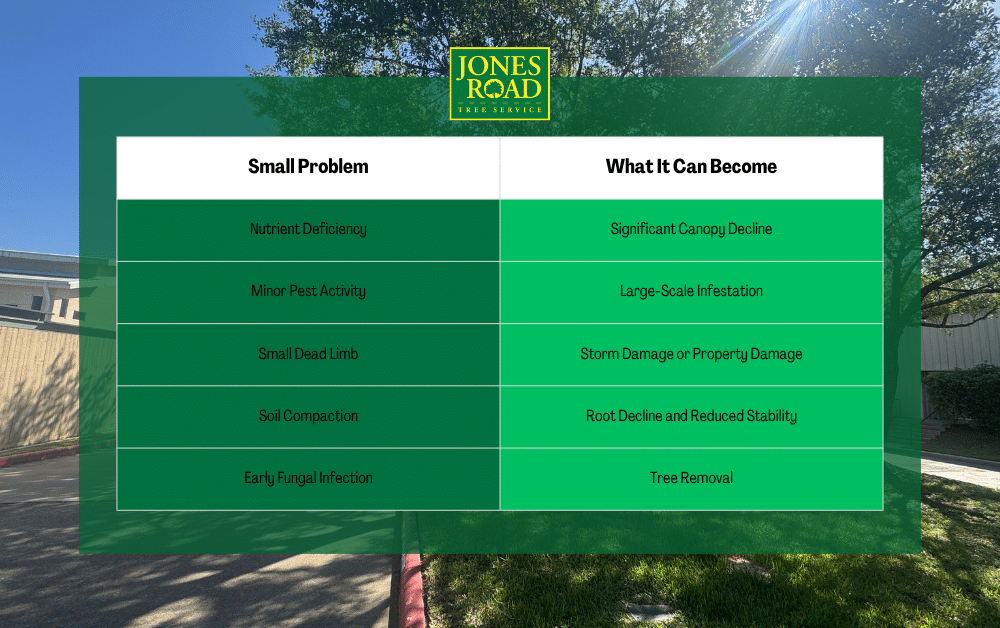
Emergency tree work almost always costs more than preventative care because it requires immediate attention and often involves larger, more complicated jobs.
The goal of proactive tree care is to identify these issues before they reach that point.
How Proactive Tree Care Helps Save Money
Healthy trees naturally resist insects, disease, and environmental stress better than unhealthy ones.
Routine inspections allow arborists to catch small issues while they’re still manageable.
For example, during a seasonal inspection an arborist may identify:
- Early insect activity
- Developing fungal disease
- Weak branch unions
- Nutrient deficiencies
- Soil compaction
- Drainage concerns
Addressing these issues early often requires less work than waiting until visible damage occurs.
Seasonal deep root fertilization also helps trees recover from Houston’s intense summers while encouraging stronger root systems and healthier growth throughout the year.
Likewise, routine inspections often identify insect activity before it becomes widespread. Our blog Common Tree Insects in Houston (And How to Spot Damage Early) explains why early detection is one of the best defenses against costly tree damage.
By staying ahead of problems instead of reacting to them, homeowners often avoid emergency removals, expensive treatments, and preventable tree loss.
What a Proactive Tree Care Plan Should Include
Not every property has the same needs, but a strong tree care program follows the changing needs of your landscape throughout the year.
Spring Deep Root Fertilization
Spring is one of the most important times to feed trees.
Deep root fertilization delivers nutrients directly into the root zone, supporting healthy foliage, stronger root development, and vigorous spring growth.
Unlike surface fertilizers, this treatment places nutrients where trees can actually absorb them.
Spring Arborist Assessment
Spring is also an ideal time for a complete tree health inspection.
During an assessment, an ISA Certified Arborist evaluates:
- Tree structure
- Overall health
- Soil conditions
- Early signs of insects
- Disease development
- Potential safety concerns
These inspections establish a baseline for the growing season and help identify issues before Houston’s summer heat places additional stress on trees.
Summer Monitoring Helps Prevent Bigger Problems
Houston summers are tough on trees. High temperatures, periods of drought, heavy rainfall, and insect activity can all place stress on even healthy trees.
This is why proactive care doesn’t stop after spring.
Regular summer monitoring allows arborists to identify changes before they become serious problems. During these visits, they look for:
- Heat and drought stress
- Early signs of insect infestations
- Fungal disease
- Branch dieback
- Declining canopy health
- Soil moisture concerns
If issues are discovered, treatment can begin before permanent damage occurs.
For example, a tree weakened by drought is more likely to attract insects. If you’ve noticed unusual leaf damage or sticky residue on your trees.
Regular monitoring gives homeowners peace of mind and helps keep small concerns from becoming expensive repairs.
Fall Fertilization Helps Trees Recover
By the time fall arrives, Houston trees have spent months dealing with heat, humidity, storms, and insect pressure.
A second deep root fertilization helps replenish nutrients that were depleted during the growing season.
Fall fertilization can:
- Encourage root development
- Improve nutrient storage
- Support overall tree health
- Prepare trees for dormancy
- Promote stronger spring growth
Because root growth continues after leaf growth slows, fall is one of the best times to strengthen a tree below ground.
Fall Arborist Assessments Keep Trees on Track
Fall inspections provide another opportunity to evaluate how trees handled the growing season.
During this assessment, an ISA Certified Arborist may look for:
- Storm damage
- Branch defects
- Lingering insect activity
- Disease development
- Soil conditions
- Structural concerns
Any recommendations made in the fall can often be completed during the winter months, when many trees are dormant and pruning can be performed more efficiently.
This year-round approach keeps trees healthier and reduces the likelihood of emergency work later.
Additional Services That Support Long-Term Tree Health
Every property is different, which is why tree care should never be one-size-fits-all.
Depending on your landscape, a proactive tree care plan may also include:
- Structural pruning
- Soil improvement
- Disease treatment
- Insect management
- Mulching
- Cabling or bracing for weakened limbs
These services are designed to address issues before they threaten the long-term health or safety of your trees.
Reactive vs. Proactive Tree Care at a Glance
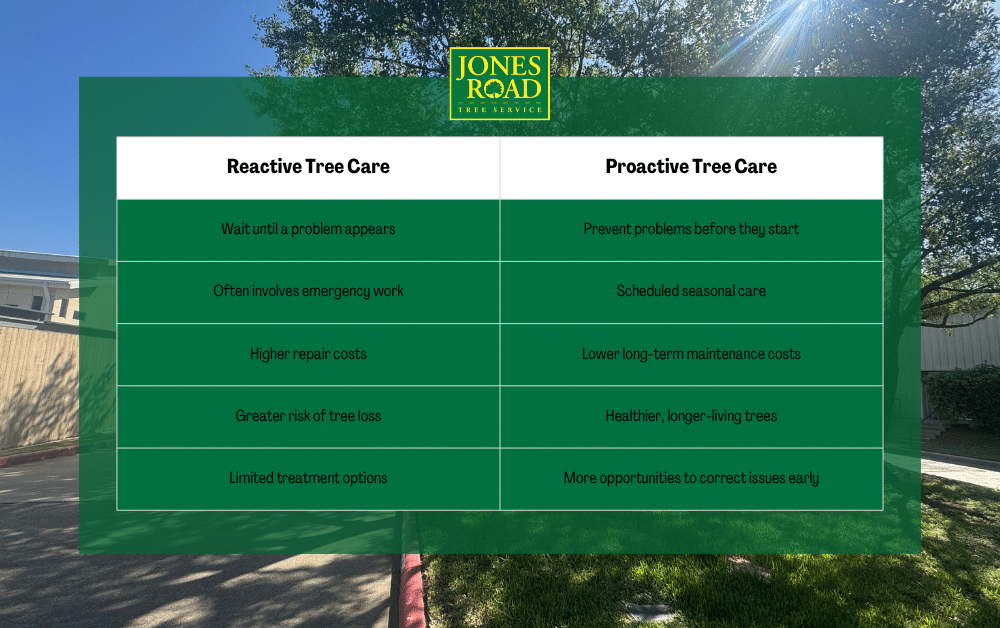
While emergencies can’t always be avoided, many common tree problems can be minimized through routine inspections and preventative care.
Which Option Saves More Money?
For most homeowners, proactive tree care is the better long-term investment.
Routine inspections and seasonal treatments cost far less than emergency removals, major storm cleanup, or replacing mature trees.
Healthy trees also provide benefits beyond appearance. They increase property value, improve shade, reduce cooling costs, and enhance the overall beauty of your landscape.
Think of tree care the same way you think about maintaining your home or vehicle. Regular maintenance costs less than waiting for something to fail.
By investing in preventative care today, you’re helping your trees stay healthier while avoiding many of the unexpected expenses that come with neglect.
Invest in Prevention, Not Repairs
The best time to care for your trees is before they begin showing signs of decline.
Reactive tree care will always have its place after storms or unexpected damage, but a proactive approach gives your trees the best chance to stay healthy, strong, and beautiful for years to come.
With routine inspections, deep root fertilization, and seasonal monitoring, you can catch problems early, reduce long-term costs, and protect one of the most valuable parts of your landscape.
Schedule Your Proactive Tree Care Plan Today
If you want to protect your trees before problems arise, Jones Road Tree Service is here to help.
Our Comprehensive Tree Care Package provides year-round professional care tailored to Houston’s unique climate. From seasonal arborist assessments to deep root fertilization and ongoing monitoring, we’ll help keep your trees healthy in every season.
Contact Jones Road Tree Service today to schedule your consultation and discover how proactive tree care can save you time, money, and unnecessary stress.