If you live in the Houston area, you already know how tough our weather can be on trees — long, humid summers, unpredictable rain, and compacted Gulf Coast soil. Many homeowners try to fix these challenges with basic fertilizers, sprinkling nutrients across the surface and hoping their trees will thrive.
But the truth is, surface fertilizer rarely reaches where your trees actually need it most: the roots.
That’s why Deep Root Fertilization in Houston has become one of the most effective ways to strengthen trees, improve soil health, and help your landscape recover from summer stress.
In this guide, we’ll explain how deep root fertilization works, why it’s especially important for Houston’s climate and soil, and why winter is the perfect time to feed your trees from the ground up.
What Is Deep Root Fertilization?
The Basic Concept
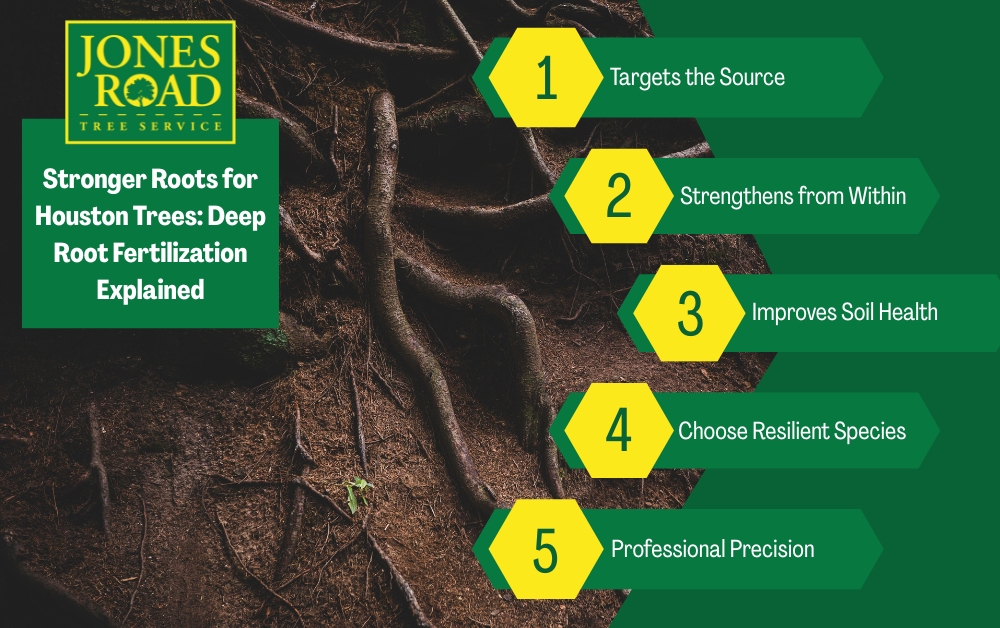
Deep root fertilization (DRF) is a targeted process where a nutrient-rich solution is injected 8–12 inches beneath the surface — directly into the root zone. This method bypasses dense, compacted topsoil and ensures that nutrients reach the fine feeder roots that sustain your trees.
How It Differs from Surface Fertilization
Surface fertilization mainly benefits grass, not trees. Houston lawns often absorb or wash away those nutrients before they ever reach the root system. By injecting below the surface, deep root fertilization delivers nutrients straight to the soil layers where roots actually grow.
What’s in the Mix
The nutrient blend used in professional applications includes:
- Nitrogen (N) – for healthy foliage and overall vigor
- Phosphorus (P) – promotes strong root development
- Potassium (K) – increases resistance to disease and stress
- Micronutrients like iron, zinc, and manganese for balanced growth
- Bio-stimulants or organic amendments to improve soil life and structure
Why Houston Trees Need Deep Root Fertilization
Urban Soil Challenges
Houston’s dense, clay-based soil makes it difficult for oxygen and nutrients to move freely. Add in heavy rainfall, construction, and foot traffic — and it’s no surprise most trees struggle to get the nutrition they need.
Nutrient Depletion Over Time
In natural forests, decomposing leaves replenish the soil. But in neighborhoods and commercial properties, leaf cleanup removes that natural nutrient cycle. Over time, this leaves your soil depleted and your trees more vulnerable to stress.
Signs Your Tree May Need Deep Root Fertilization
If your Houston landscape shows any of these symptoms, your trees may be nutrient-deficient:
- Yellowing or pale leaves often indicate a nitrogen deficiency, common in clay soils.
- Sparse canopies or dead branch tips can point to low potassium or poor oxygen flow.
- Stunted growth usually signals compacted soil — a frequent problem in Houston yards.
- Early leaf drop may be caused by nutrient imbalance or summer drought stress.
If any of these signs sound familiar, your trees could benefit from professional fertilization before spring growth begins.
The Science Behind Feeding the Roots
How Nutrients Travel Through Soil
Houston’s heavy soil and warm, humid climate make nutrient movement unpredictable. When injected deep underground, fertilizer bypasses runoff and evaporation, staying where roots can absorb it efficiently.
Root Zone Absorption Explained
Most of a tree’s feeder roots — the small, fibrous ones that absorb nutrients — are located near the soil surface and extend well past the drip line. That’s why arborists use a grid injection pattern around the tree’s canopy, not at the trunk.
The Soil Connection
Deep root fertilization also improves oxygen exchange and microbial activity in Houston’s compacted clay. Loosening the soil helps beneficial bacteria thrive, which further supports nutrient absorption.
The Deep Root Fertilization Process (Step by Step)
1. Assessment by a Certified Arborist
An ISA Certified Arborist evaluates the tree’s species, soil type, and health condition. Soil testing may be done to determine specific nutrient deficiencies.
2. Preparation of the Nutrient Solution
Based on soil conditions, the arborist selects the appropriate fertilizer blend — customized for your landscape.
3. Injection Grid Pattern
Using a specialized injector probe, nutrients are applied in a grid pattern spaced 2–3 feet apart around the drip line. This ensures even distribution throughout the root zone.
4. Depth and Pressure
The mixture is injected under moderate pressure 8–12 inches deep. This method breaks up compacted layers, increases oxygen flow, and delivers nutrients directly to the roots.
5. Follow-Up and Maintenance
After treatment, the arborist provides recommendations for watering, monitoring, and future applications — usually every 12–18 months for optimal results.
Ready to strengthen your trees from the roots up? Schedule a deep root fertilization service with Jones Road Tree Service today.
Timing Matters — Why Winter Is Ideal in Houston
Unlike northern climates, Houston’s mild winters mean your soil stays active year-round. While the canopy may go dormant, the roots continue to absorb water and nutrients. That makes winter the perfect time for deep root fertilization.
- Cooler temperatures reduce stress, allowing trees to focus energy on root growth.
- Less competition from turfgrass and surface plants means more nutrients reach the roots.
- Increased root development sets the stage for vigorous growth in spring.
- Recovery from summer heat — winter fertilization replenishes nutrients lost during the long, dry summer.
Benefits of Deep Root Fertilization for Houston Landscapes
Stronger Roots and Canopy Growth
Deep root fertilization encourages robust root development, which directly supports denser foliage, better flowering, and improved overall vigor.
Improved Resistance to Stress
Healthy, well-fed trees are more resilient during drought, heavy rain, or sudden temperature swings — common conditions in Southeast Texas.
Enhanced Soil Structure
Injecting nutrients under pressure loosens compacted soil, improving aeration and water retention. This benefit continues long after the fertilization itself.
Disease and Pest Prevention
Trees receiving proper nutrition can naturally fend off common Texas pests like borers and scale insects. They also recover faster from fungal infections or pruning wounds.
Stronger Roots, Stronger Houston Landscapes
Healthy trees don’t just happen on their own — they start underground. Deep root fertilization feeds the foundation of your landscape, helping Houston trees thrive despite tough soil, long summers, and unpredictable weather.
If you’ve noticed thinning canopies, pale leaves, or stunted growth, it’s time to look deeper. Give your trees the support they deserve this winter with a professional deep root fertilization service.
Ready to invest in the long-term health of your landscape? Schedule your deep root fertilization appointment with Jones Road Tree Service today.